
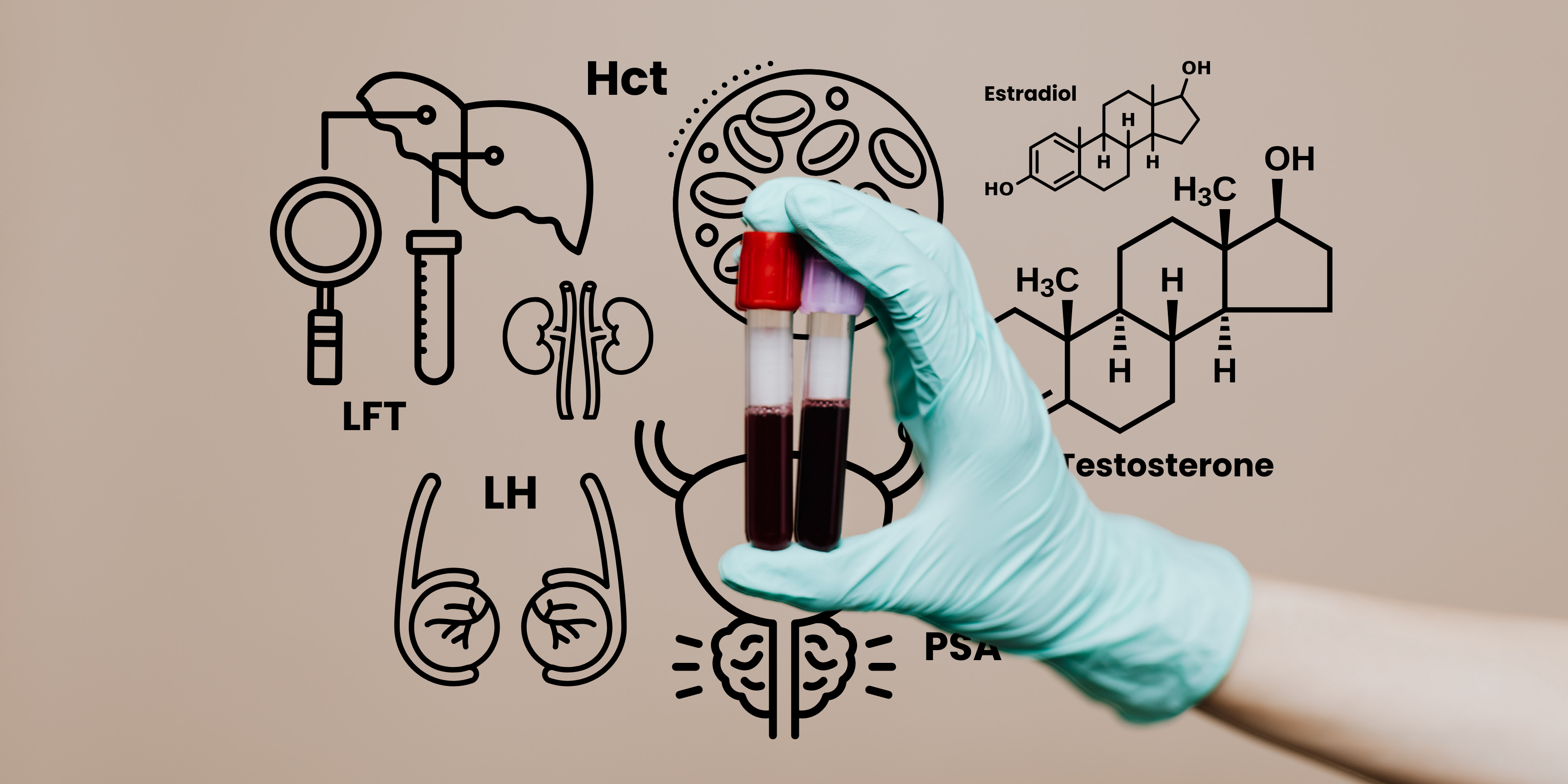
Many men experiencing fatigue, low libido, reduced motivation, erectile difficulties, or loss of muscle mass assume that one total testosterone result is enough to determine whether they need testosterone replacement therapy (TRT).
However, testosterone levels must be interpreted alongside symptoms, related hormones, and important safety markers. A proper evaluation helps confirm testosterone deficiency, identify its possible cause, and determine whether TRT—or another treatment—is the most appropriate option.
Why Total Testosterone Alone Is Not Enough
1. Free Testosterone Shows How Much Testosterone Is Available
Total testosterone measures all testosterone circulating in the blood, including testosterone that is bound to proteins.
Free testosterone is the small proportion that is not protein-bound and is readily available to tissues. A man may have a total testosterone result within the normal range but still have low free testosterone, particularly when sex hormone-binding globulin (SHBG) is elevated.
Assessing both total and free testosterone provides a clearer picture of testosterone status.
2. SHBG Affects Testosterone Availability
Sex hormone-binding globulin binds strongly to testosterone, thereby influencing the amount of free testosterone available.
- High SHBG may reduce free testosterone despite a normal total testosterone level.
- Low SHBG may produce a relatively low total testosterone result while free testosterone remains adequate.
SHBG can be affected by age, body weight, thyroid function, liver health, metabolic conditions, and certain medications. Measuring SHBG helps prevent total testosterone results from being interpreted in isolation.
3. LH Helps Identify the Cause of Low Testosterone
Luteinizing hormone (LH) signals the testicles to produce testosterone. Measuring LH helps distinguish between two broad causes of testosterone deficiency:
- Primary hypogonadism: The testicles are not responding adequately, and LH may be elevated.
- Secondary hypogonadism: The pituitary gland or hypothalamus fails to provide sufficient stimulation, and LH may be low or inappropriately normal.
Identifying the cause is important because some men—particularly those who wish to preserve fertility—may be suitable for treatments that stimulate natural testosterone production, such as clomiphene or hCG, rather than conventional TRT.
Additional testing, including FSH or pituitary evaluation, may be recommended when clinically indicated.
4. Estradiol Is Important for Hormonal Balance
Some testosterone is converted into estradiol through a process called aromatization. Although estradiol is often considered a female hormone, men also need an appropriate amount for sexual function, bone health, mood, and general well-being.
Estradiol that is unusually high or low may contribute to symptoms such as breast tenderness, fluid retention, mood changes, reduced libido, or sexual dysfunction. A baseline estradiol test also provides a useful comparison if symptoms develop during treatment.
Essential Safety Tests Before Starting TRT
Hormone results alone cannot determine whether testosterone treatment can be started safely. At Transcend Clinic, the mandatory baseline evaluation also includes a complete blood count and total PSA.
5. CBC and Hematocrit
TRT can stimulate red blood cell production and raise hematocrit. If hematocrit becomes too high, the blood becomes more concentrated, potentially increasing the risk of complications.
A complete blood count (CBC) measures hematocrit and other blood-cell markers before treatment. It helps identify an existing elevation and provides a baseline for future monitoring.
6. Total PSA for Prostate Monitoring
Prostate-specific antigen (PSA) is used as part of prostate health screening. Establishing a baseline before TRT is important because PSA should be monitored during treatment.
An elevated PSA does not automatically mean prostate cancer, but it may require repeat testing, further assessment, or referral to a urologist before TRT is considered.
Optional Tests Based on Symptoms and Risk Factors
Not every patient requires the same blood tests. Additional investigations should be selected according to symptoms, age, medical history, and individual risk factors.
Prolactin for Low Libido or Sexual Dysfunction
Elevated prolactin may suppress reproductive hormone signaling and contribute to low libido, erectile dysfunction, or low testosterone symptoms.
Prolactin testing is particularly useful when sexual symptoms are prominent or when LH and testosterone results suggest a possible pituitary cause. Markedly elevated or persistently abnormal results may require further investigation.
Cardiovascular and Metabolic Health
Older patients and men with obesity, erectile dysfunction, diabetes, or other metabolic risk factors may benefit from additional testing, including:
- Lipid profile
- Fasting glucose
- HbA1c
- Kidney function, including creatinine and estimated GFR
- Liver function tests
These tests help assess overall health and identify conditions that may contribute to low testosterone symptoms or affect the safety and management of TRT.
Thyroid, Adrenal, and Growth Hormone-Related Testing for Chronic Fatigue
Fatigue is not specific to testosterone deficiency. When chronic fatigue is a major concern, additional tests may include:
- Thyroid-stimulating hormone (TSH)
- Free T3
- Morning cortisol
- DHEA-S
- IGF-1
These markers may help identify thyroid dysfunction, adrenal-related abnormalities, or other possible explanations for persistent fatigue.
Confirming a Diagnosis Before Treatment
TRT should not be started based on symptoms or on a single isolated blood result. Testosterone levels can vary with time of day, sleep quality, recent illness, calorie intake, medication use, and testing conditions.
Diagnosis generally requires compatible symptoms together with consistently low testosterone levels. In many cases, an abnormal testosterone result should be confirmed with another morning blood test before committing to long-term treatment.
Conclusion
A total testosterone test is an important starting point. Still, it cannot show how much testosterone is available, explain why the level is low, or determine whether TRT can be started safely.
A complete evaluation supports a more accurate diagnosis, identifies possible underlying conditions, and allows treatment to be individualized and monitored safely.
“Blood test requirements may vary based on age, symptoms, medical history, fertility plans, and clinical findings. Your doctor should interpret the results and recommend the appropriate next step.”